18/05/2026
The results of the calls under the “Increased Cybersecurity” destination of Cluster 3: Civil Security for Society within the Horizon Europe Programme have been announced. The QuantumShield project, coordinated by Ekinops France and involving Sabancı University as one of the consortium partners, has been selected for funding under the HORIZON-CL3-2025-02-CS-ECCC-06 call.
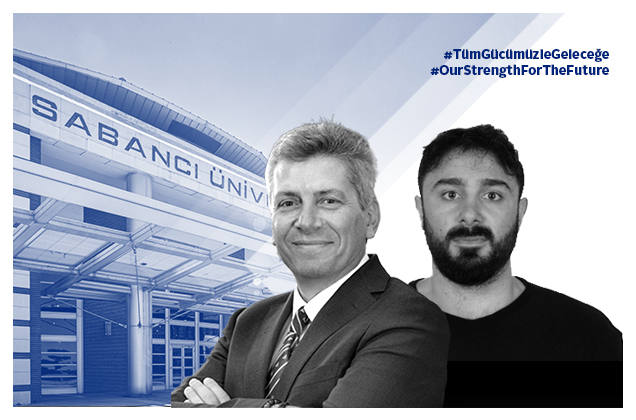
The QuantumShield project, officially titled “Post-Quantum-Safe Management, Authentication, and Routing for Telecom and Cloud Networks,” will be carried out at Sabancı University under the leadership of Prof. Dr. Erkay Savaş, Dean of the Faculty of Engineering and Natural Sciences, with the participation and contributions of Post-Doctoral Researcher Dr. Tolun Tosun. The project will be supported for EU funding under the call HORIZON-CL3-2025-02-CS-ECCC-06: Integration of Post-Quantum Cryptography (PQC) algorithms into high-level protocols.
QuantumShield aims to protect telecom and cloud networks against future security risks that may arise from quantum computers. The project will help key internet and network security systems move safely toward new, quantum-resistant encryption methods, while allowing existing and next-generation technologies to work together during the transition. It will also develop a secure hardware-based solution for managing digital keys in network and edge devices. Overall, QuantumShield will contribute to making Europe’s digital infrastructure more secure, resilient, and ready for the quantum era.
The project will be implemented under the coordination of Ekinops France (France), with contributions from international partners; Sabanci University (TR), University of Surrey (UK), Orange Business Services (France), and Orange Romania SA (Romania), Orange Servıces SRL (Romania).
During the consortium-building phase for the project proposal, the partner search was carried out through the Enterprise Europe Network Istanbul project, coordinated by Sabancı University.
We congratulate our faculty members on this achievement and extend our thanks to all colleagues in SUATT Directorate who contributed to the process.